

TL;DR:
- In 2026, workforce compliance hinges on complete, accurate, and defensible time records with verified audit trails. HR teams must adopt automated, AI-powered systems and implement strong methodologies, including manager training and regular policy audits, to mitigate legal risks. Prioritizing process over software ensures organizations remain compliant amid evolving regulations and state-specific rules.
Workforce compliance has never carried more legal weight than it does right now. HR teams and operations managers face a tighter regulatory environment where incomplete or inaccurate time tracking creates personal liability risks for management, not just organizations. Regulators are scrutinizing hour records with greater detail, and a single gap in your process can trigger investigations, fines, or lawsuits that reach all the way to the boardroom. This article breaks down the key trends reshaping time tracking compliance in 2026, the technology and policies behind them, and the concrete steps HR professionals can take to stay ahead.
Table of Contents
- Defining workforce compliance in 2026: Why time tracking matters
- Trend 1: Verified, defensible systems are now standard
- Trend 2: Rounding rules and state law overlays
- Trend 3: Automation and AI-powered time tracking
- Comparison: Manual vs. automated systems for compliance
- How to choose: Recommendations for HR teams in 2026
- The uncomfortable truth: Why most HR teams struggle with time tracking compliance
- Solutions for advanced time tracking and workforce compliance
- Frequently asked questions
Key Takeaways
| Point | Details |
|---|---|
| Compliance is high-stakes | Incomplete or inaccurate time tracking puts organizations at risk for fines, liability, and investigations. |
| Verified audit trails are essential | Defensible records, manager training, and regular audits are needed for compliance in 2026. |
| Rounding rules face legal scrutiny | Neutral rounding and alignment with state laws are critical to avoid underpayment issues and fines. |
| Automation reduces errors | AI and automated systems increase accuracy, speed audits, and prevent compliance risks. |
| Methodology beats software | Effective compliance management requires strong policies, training, and regular reviews—not just technology. |
Defining workforce compliance in 2026: Why time tracking matters
Compliance in time tracking is no longer just about clocking in and out. In 2026, legal requirements demand that records be complete, accurate, and defensible, meaning they hold up under investigation or litigation. Regulators want to see that actual daily and weekly hours are tracked reliably, not approximated.
Many organizations still rely on rough estimates, flat break deductions, or inconsistent overtime recording. These practices create exposure. Here is what typically goes wrong:
- Rough estimates instead of actual records: When managers fill in hours from memory, the accuracy gap compounds over weeks and months.
- Missing or automatic break deductions: Deducting 30 minutes for lunch regardless of whether employees actually took a break is a common audit trigger.
- Unverified overtime: Overtime that is missed or miscalculated can mean back-pay liability across entire departments.
- Inconsistent records across shifts or locations: Gaps between what one supervisor records and another can suggest systemic problems.
Here is the critical insight most HR teams miss: compliance issues rarely surface during normal operations. They surface after a workplace accident, a departing employee's complaint, or a government audit. By then, fixing your records retroactively is impossible.
"Compliance exposure is a silent risk. It sits in your timesheets for months before it becomes a legal problem."
This is why investing in a sound manager's time tracking guide and clear methodology matters far more than most organizations realize. The foundation of workforce compliance in 2026 is not the software you use but the approach that software supports. Understanding tracking hours for compliance from a legal and operational perspective is the first step to closing those gaps.
Trend 1: Verified, defensible systems are now standard
The word "defensible" has moved from legal jargon to operational expectation. A verified system is one where every time entry can be traced, explained, and confirmed by both the employee and a manager. Audit trails are no longer optional extras in workforce software. They are the baseline.
Regulators and law firms now warn that incomplete records can expose management and boards to personal liability. That shift in accountability is significant. It means HR leaders and operations managers are personally at risk when their teams fail to maintain verified records.
What does a defensible system look like in practice?
- Timestamped clock-ins and clock-outs with no manual override without manager approval and reason
- Employee confirmation of hours worked through self-service portals or mobile apps before payroll is processed
- Manager review and sign-off at the end of each pay period, not just at month end
- Digital audit trails that log every edit, who made it, and when it was made
- Regular spot checks where a sample of timesheets is reviewed for consistency with schedule records
Manager training is equally critical. Without it, even the best software fails. Managers need to understand why they cannot round hours informally, why break records matter, and how their edits appear in an audit trail. A well-structured step-by-step accurate tracking program gives managers the process knowledge they need.
Pro Tip: If your current system does not automatically log every edit with a timestamp and user ID, consider it a compliance gap regardless of how accurate the original entries may be. Digital timesheet tracking platforms and tools built with audit trails eliminate this blind spot by design. Pair your platform with a thorough clock-in accuracy process and you substantially reduce your legal exposure.
Trend 2: Rounding rules and state law overlays
Time rounding sounds like a minor administrative detail. It is not. Rounding has become one of the highest-scrutiny areas in workforce compliance, especially as state-level regulations tighten rules that the federal Fair Labor Standards Act (FLSA) has left relatively flexible.
Scrutiny on rounding focuses on whether rounding is neutral, whether it systematically underpays employees, and whether it aligns with specific state law constraints. California, for example, bans rounding for meal period calculations entirely.
Here are the key factors HR should audit:
- Increment size: 5-minute, 6-minute, or 15-minute rounding increments carry different risk levels. Larger increments increase the likelihood of net underpayment.
- Rounding direction: Rounding always in the employer's favor is a clear legal risk and audit trigger.
- Frequency of review: Rounding should be audited at least annually to confirm it is neutral across all employees.
- State-specific rules: Some states restrict which periods can be rounded and to what increments. HR must layer state law on top of FLSA requirements.
| Rounding practice | Compliance risk level | Common states affected |
|---|---|---|
| Neutral 5-minute increments | Low | Most states |
| 15-minute increments, employer-favored | High | All states |
| No rounding for meal periods | Required | California |
| Annual rounding audits conducted | Low | All states |
| No rounding audit process | Very high | All states |
A clear compliance strategy for time tracking includes a documented rounding policy, a record of annual reviews, and alignment between your payroll system's rounding logic and your written policy. If those three things do not match, you have a gap.
Trend 3: Automation and AI-powered time tracking
Manual time tracking had its moment. In 2026, automation and AI-assisted tools have become the practical standard for organizations serious about compliance. The reason is straightforward: humans make consistent, predictable errors under pressure, and payroll is always under pressure.

Digital solutions with audit trails and automation reduce compliance risks meaningfully while improving overall productivity. The real value of automation is not just speed. It is consistency. An automated system does not round differently on Fridays, forget to flag a missed break, or fill in a blank with an assumption.
Here is what AI-powered time tracking tools can do that manual systems cannot:
- Anomaly detection: Flag employees whose hours deviate significantly from their scheduled pattern, prompting a review before payroll closes.
- Missed break alerts: Automatically identify shifts where break time was not recorded, reducing the risk of improper deductions.
- Overtime forecasting: Predict when employees are approaching overtime thresholds so managers can adjust scheduling proactively.
- Location verification: Geofencing technology confirms that clock-ins happen at the actual worksite, not from a parking lot or home.
- Compliance reporting: Generate ready-made reports formatted for regulatory submissions or internal audits.
| Feature | Manual tracking | Automated/AI tracking |
|---|---|---|
| Clock-in accuracy | Variable | Consistent and timestamped |
| Break monitoring | Manager-dependent | Automated alerts |
| Audit trail quality | Incomplete | Full edit history |
| Overtime detection | Reactive | Proactive |
| Compliance reporting | Manual effort | Automated generation |
| Error rate | Higher | Significantly lower |
Pro Tip: When evaluating automated tools, ask specifically how the system handles retroactive edits. A compliant system requires manager justification for any change and logs the original entry alongside the correction. This is what makes a record defensible, not just accurate. Explore the benefits of automated solutions and see how they can reduce your team's administrative burden while tightening your compliance posture.
Comparison: Manual vs. automated systems for compliance
The practical decision most HR and operations teams face is not whether to improve their time tracking but how to prioritize the transition. A side-by-side look at the core compliance dimensions makes the choice clearer.
Verified and automated audit trails are increasingly necessary in 2026, especially as more states enact specific timekeeping requirements and labor boards increase their investigative capacity.
| Dimension | Manual systems | Automated systems | Hybrid approach |
|---|---|---|---|
| Record accuracy | Lower, error-prone | High, consistent | Good with oversight |
| Audit capability | Slow, incomplete | Fast, full trails | Moderate |
| Compliance risk | High | Low | Low to moderate |
| Payroll speed | Slower | Faster | Moderate |
| Manager burden | High | Low | Moderate |
| Cost | Low upfront | Higher upfront | Moderate |
| Scalability | Poor | Excellent | Good |
If you are evaluating next steps, here is a practical sequence:
- Audit your current state by pulling 30 days of timesheets and checking for gaps, unauthorized edits, and missing break records.
- Document your rounding policy and verify it against both FLSA rules and your specific state laws.
- Identify the compliance risks most relevant to your industry and workforce size.
- Evaluate automated systems based on their audit trail quality, state law adaptability, and manager training support.
- Plan a phased rollout starting with your highest-risk departments or locations.
For a broader view of what is shaping the field, reviewing workforce management trends in 2026 gives HR leaders useful context on where the industry is heading and what to prioritize.
How to choose: Recommendations for HR teams in 2026
There is no single right answer for every organization, but there are clear patterns based on size, industry, and compliance complexity.
For small teams (fewer than 50 employees), the priority should be a digital, audit-friendly app with simple workflows. The goal is eliminating paper timesheets and manual entry while creating a basic audit trail. Look for mobile clock-in options, simple manager approval workflows, and easy payroll export. Complexity is the enemy at this scale.
For mid-size organizations (50 to 500 employees), automation becomes essential. You need compliance reporting built in, not bolted on. Manager training programs, rounding policy documentation tools, and real-time dashboard visibility are key. Budget for initial setup and training time because both pay dividends quickly.
For large organizations (500 or more employees), full automation with AI-assisted anomaly detection is worth the investment. Multi-location geofencing, state-by-state compliance overlays, and integration with payroll systems at the enterprise level are non-negotiable. Compliance at scale requires systems that flag problems before they compound across thousands of employees.
Methodology is as important as software: HR teams should align rounding rules, records, and manager training to ensure defensibility. Software is only as good as the process it supports.
- Conduct annual policy audits that include rounding review, break policy verification, and overtime calculation checks.
- Train every manager, not just new hires, on the legal significance of time records.
- Document every policy decision and keep those documents in a central, accessible location.
- Use your manager's time tracking compliance guide as a living reference, updating it whenever regulations change.
Pro Tip: Before selecting any time tracking platform, request a demo focused specifically on its audit trail and compliance reporting features. Vendors are eager to show you dashboards. Make them show you what happens when a manager edits a timesheet at 11pm on a Friday.
The uncomfortable truth: Why most HR teams struggle with time tracking compliance
Here is something that most compliance guides will not tell you directly: the majority of time tracking failures are not software failures. They are methodology failures. Organizations buy sophisticated platforms, implement them quickly, and then watch managers work around the system within three months because no one changed the underlying culture or provided meaningful training.
The teams that consistently avoid compliance problems share three traits. First, they treat time records as legal documents, not administrative paperwork. That mindset shift changes how managers handle every edit and every approval. Second, they invest in manager training as an ongoing practice rather than a one-time onboarding checkbox. Third, they run internal audits before regulators do.
HR and operations teams should treat compliance as part of methodology, not just software: rounding rules, audit trails, and completeness of hour, break, and overtime records remain high-stakes edge cases in 2026. The word "methodology" is doing real work in that statement. It means your process, your training, your audit cadence, and your policy documentation have to hold up, not just your software subscription.
Software is a vehicle. Methodology is the road. Without both, you are not going anywhere defensible. The organizations that treat compliance as an operational discipline rather than an annual checkbox are the ones that never appear in wage and hour litigation headlines. That is not luck. It is the result of deliberate investment in tracking employee hours the right way, every pay period, at every level of the organization.
Solutions for advanced time tracking and workforce compliance
Building a compliant, defensible time tracking system requires more than good intentions. It requires the right technology working alongside clear policies and trained managers. Modern platforms are purpose-built to close the gaps that manual processes leave open, and they do it at scale.
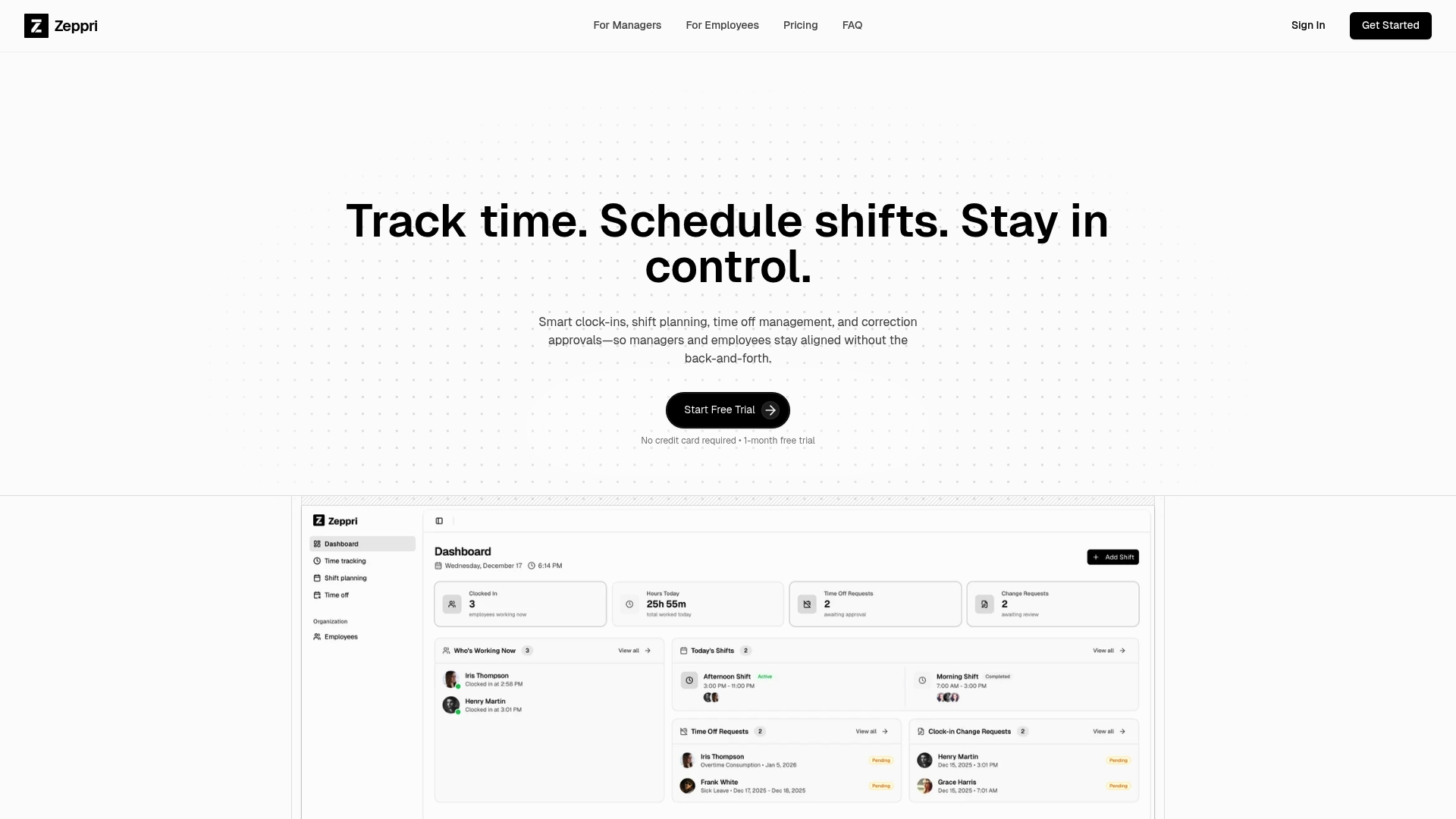
Zeppri delivers an all-in-one workforce management platform designed for exactly this compliance environment. With real-time mobile clock-ins, geofencing for location verification, automated audit trails, and robust reporting tools, Zeppri gives HR teams and operations managers the visibility they need to stay defensible. Whether you manage 10 employees or 10,000, the platform adapts to your compliance requirements and provides the documentation you need when it matters most. From shift planning to payroll export, every step is built around accuracy, verification, and simplicity.
Frequently asked questions
What compliance risks are most common in time tracking for 2026?
Incomplete records, inaccurate overtime, and unverified rounding practices pose the biggest risks for HR teams. Inaccurate time tracking can expose management to personal legal liability, not just organizational fines.
Are rounding policies allowed everywhere in 2026?
Some states restrict or ban rounding for certain periods, so HR must check their local rules before setting policy. Some states specify allowed increments or can ban rounding outright for specific periods such as California meal breaks.
How do automated time tracking tools help HR teams?
Automated tools increase accuracy, reduce manual input, and provide audit trails that support compliance and error detection. They also flag anomalies like missed breaks or unusual overtime before payroll closes, reducing retroactive fixes.
What should organizations look for in a time tracking solution for 2026?
Choose systems with verified audit trails, manager training support, and regular policy review functionality for defensibility. Verified systems and manager training are the most reliable indicators of long-term compliance success.