

TL;DR:
- Workforce compliance is an ongoing process that aligns legal, ethical, and operational standards.
- Automated systems and collaborative models enhance compliance accuracy, accountability, and employee trust.
- Strategic compliance investment drives growth, reduces risks, and provides a competitive business advantage.
Most HR managers and compliance officers have been handed a compliance checklist at some point and told to make sure everything is checked off. That framing is exactly the problem. Many organizations treat compliance as a burdensome cost center rather than a strategic asset, which means they end up reacting to violations instead of building systems that prevent them. This guide breaks down what workforce compliance actually means, how different management models compare, why automation changes the game, and how smart compliance strategy gives your organization a real competitive edge.
Table of Contents
- Defining workforce compliance: More than rules and regulations
- Compliance models: Top-down, hands-off, and collaborative approaches
- Compliance management: From manual processes to technology-driven automation
- Transforming compliance from cost center to strategic advantage
- Our take: Why compliance strategy is your hidden competitive edge
- Take your workforce compliance to the next level
- Frequently asked questions
Key Takeaways
| Point | Details |
|---|---|
| Compliance is strategic | Turning compliance into a business priority delivers lasting value and trust. |
| Models matter | Choosing the right compliance structure helps fit your organization's culture and needs. |
| Automation reduces risk | Technology-enabled compliance cuts errors and streamlines processes for HR teams. |
| Collaborative approach wins | Sharing compliance responsibility boosts accountability and engagement. |
| Business value | Proactive compliance drives reputation, growth, and workforce satisfaction. |
Defining workforce compliance: More than rules and regulations
Workforce compliance is not a binder of policies sitting on a shelf. It is an active, ongoing management process that touches every part of how your organization hires, schedules, pays, and manages people. At its core, compliance involves processes that ensure companies meet regulatory, legal, and ethical obligations. Notice that word "ethical." Compliance is not just about what the law requires. It is also about what your organization stands for.
This distinction matters more than most people realize. A company can be technically compliant with labor laws while still creating an environment where employees feel unsafe, overworked, or undervalued. True compliance closes that gap. It aligns your operational practices with both legal requirements and the values your workforce expects you to uphold.
Here is where most organizations go wrong:
- Treating compliance as a one-time audit rather than a continuous process
- Assigning compliance responsibility to a single person or team with no broader accountability
- Confusing documentation with actual compliance behavior
- Failing to update policies when regulations or organizational needs change
- Ignoring the connection between compliance and employee trust
That last point deserves more attention. When employees see that your organization takes scheduling accuracy, overtime rules, and leave entitlements seriously, they trust you more. That trust translates directly into lower turnover, better engagement, and fewer disputes. Centralized schedule management is one practical way to build that trust, because it removes ambiguity about who is working when and ensures shift assignments follow your compliance rules consistently.
"Compliance is not a destination you reach. It is a standard you maintain every single day across every team, location, and role in your organization."
Think of compliance as the foundation of your workforce management structure. Without it, even the best scheduling tools and HR programs will crack under pressure when a regulatory review or employee dispute surfaces.
Compliance models: Top-down, hands-off, and collaborative approaches
Once compliance is understood conceptually, it is crucial to see how organizations structure their approach. The model you choose shapes everything from how policies get communicated to how violations get addressed.
Organizations may enforce compliance strictly from the top, delegate entirely, or share responsibility among teams. Each model has a place, but none is universally ideal.

| Model | Best fit | Key strength | Key drawback |
|---|---|---|---|
| Top-down | Large, regulated industries | Consistency and control | Slow to adapt, low employee buy-in |
| Hands-off | Small, high-trust teams | Autonomy and flexibility | High risk of gaps and inconsistency |
| Collaborative | Mid-size to large, modern workforces | Accountability at every level | Requires strong communication infrastructure |
Here is how to think about choosing the right model for your organization:
- Assess your regulatory environment. Highly regulated industries like healthcare or finance typically need tighter top-down controls.
- Evaluate your workforce size and distribution. Distributed teams across multiple locations benefit from collaborative models with shared accountability.
- Consider your current compliance maturity. If your processes are fragmented, start with more structure before moving toward distributed responsibility.
- Factor in your technology stack. Collaborative compliance only works if everyone has access to the same real-time data.
The collaborative model is gaining ground because modern workforces are more distributed, more mobile, and more informed than ever before. When managers and employees share responsibility for compliance, violations get caught earlier and accountability becomes part of the culture rather than an external imposition.
Pro Tip: Automated time tracking is a practical enabler of collaborative compliance. When every team member can see their own hours, breaks, and schedule in real time through mobile app features, they become active participants in keeping records accurate rather than passive subjects of oversight.
Compliance management: From manual processes to technology-driven automation
After discussing organizational models, let's turn to the tools and methods that make compliance efficient. Manual compliance processes are not just slow. They are genuinely risky.
Consider what manual compliance actually involves: paper timesheets, spreadsheet-based scheduling, email chains for leave approvals, and periodic manual audits. Each of those touchpoints is an opportunity for human error, lost documentation, or outdated information to create a compliance gap.
Automated compliance systems can reduce human error and improve transparency in ways that manual processes simply cannot match. Here is a direct comparison:
| Process | Manual approach | Automated approach |
|---|---|---|
| Time tracking | Paper or spreadsheet entry | Real-time digital clock-ins with audit trail |
| Schedule compliance | Manager manually checks rules | System flags violations before publishing |
| Leave management | Email requests, manual approval | Automated workflow with instant status updates |
| Reporting | Compiled manually before audits | On-demand reports generated in seconds |
The benefits of automation go beyond speed:
- Errors in payroll calculations drop significantly when hours are tracked digitally
- Regulatory changes can be applied system-wide instantly rather than requiring manual policy updates across departments
- Audit readiness becomes a default state rather than a scramble
- Managers spend less time on administrative tasks and more time on actual workforce oversight
Pro Tip: When transitioning from manual to automated systems, avoid the common mistake of digitizing broken processes. Before you implement workforce management apps, map your current compliance workflows and identify where the real gaps are. Automation amplifies what is already there, good or bad. Also, make sure your team understands how to use mobile clock-in tools correctly from day one, because inconsistent adoption is the fastest way to undermine the accuracy gains you are trying to achieve.
Transforming compliance from cost center to strategic advantage
Understanding compliance tools, it is time to explore the real-world payoff of doing compliance right. The organizations that treat compliance as a strategic investment rather than a regulatory obligation consistently outperform those that do not.
Compliance can be leveraged to support growth, enhance reputation, and strengthen employee trust. That is not a theoretical claim. It shows up in measurable ways:
- Reputation: Organizations with strong compliance records attract better talent and earn more trust from clients and partners
- Employee engagement: Workers who see fair, consistent enforcement of scheduling and pay rules report higher job satisfaction
- Cost savings: Proactive compliance reduces legal fees, settlement costs, and regulatory fines
- Operational efficiency: Compliance-driven processes are typically better documented and easier to scale
- Risk reduction: Early identification of compliance gaps prevents small issues from becoming significant legal exposures
Stat to know: Organizations that invest in proactive compliance programs report significantly lower rates of regulatory violations and workforce disputes compared to those relying on reactive approaches.
The cultural dimension of compliance is often underestimated. When your workforce sees that compliance is taken seriously at every level, it signals that the organization respects their rights and time. That signal builds loyalty. Workforce management efficiency and compliance are not competing priorities. They reinforce each other.
Pro Tip: Make compliance wins visible. When your organization passes an audit, reduces scheduling errors, or successfully implements a new regulation, communicate that to your leadership team and your workforce. Most people only hear about compliance when something goes wrong. Changing that narrative repositionally compliance as a value driver, which makes it easier to secure budget and team buy-in for future improvements. Pair this with efficient shift scheduling practices to show tangible results from your compliance investments.
Our take: Why compliance strategy is your hidden competitive edge
Most organizations treat compliance as the floor, the minimum they need to do to avoid penalties. We think that framing leaves enormous value on the table.
Here is the contrarian view: your competitors are almost certainly underinvesting in compliance strategy. They are checking boxes, running annual audits, and hoping nothing surfaces between reviews. That creates a real opening for organizations willing to treat compliance as an ongoing, strategic function.
The workforce management platform you choose signals how seriously you take this. Organizations that invest in real-time visibility, automated recordkeeping, and mobile-first compliance tools are not just reducing risk. They are building operational infrastructure that makes everything else easier: payroll, scheduling, performance management, and workforce planning.
Compliance is not a hurdle. It is the system that keeps your workforce running fairly and efficiently. The organizations that understand this earliest gain an advantage that is genuinely hard to replicate, because it is baked into how they operate every single day.
Take your workforce compliance to the next level
The strategies in this article only deliver results when they are backed by the right tools. Manual processes and fragmented systems will always limit how far your compliance program can go.
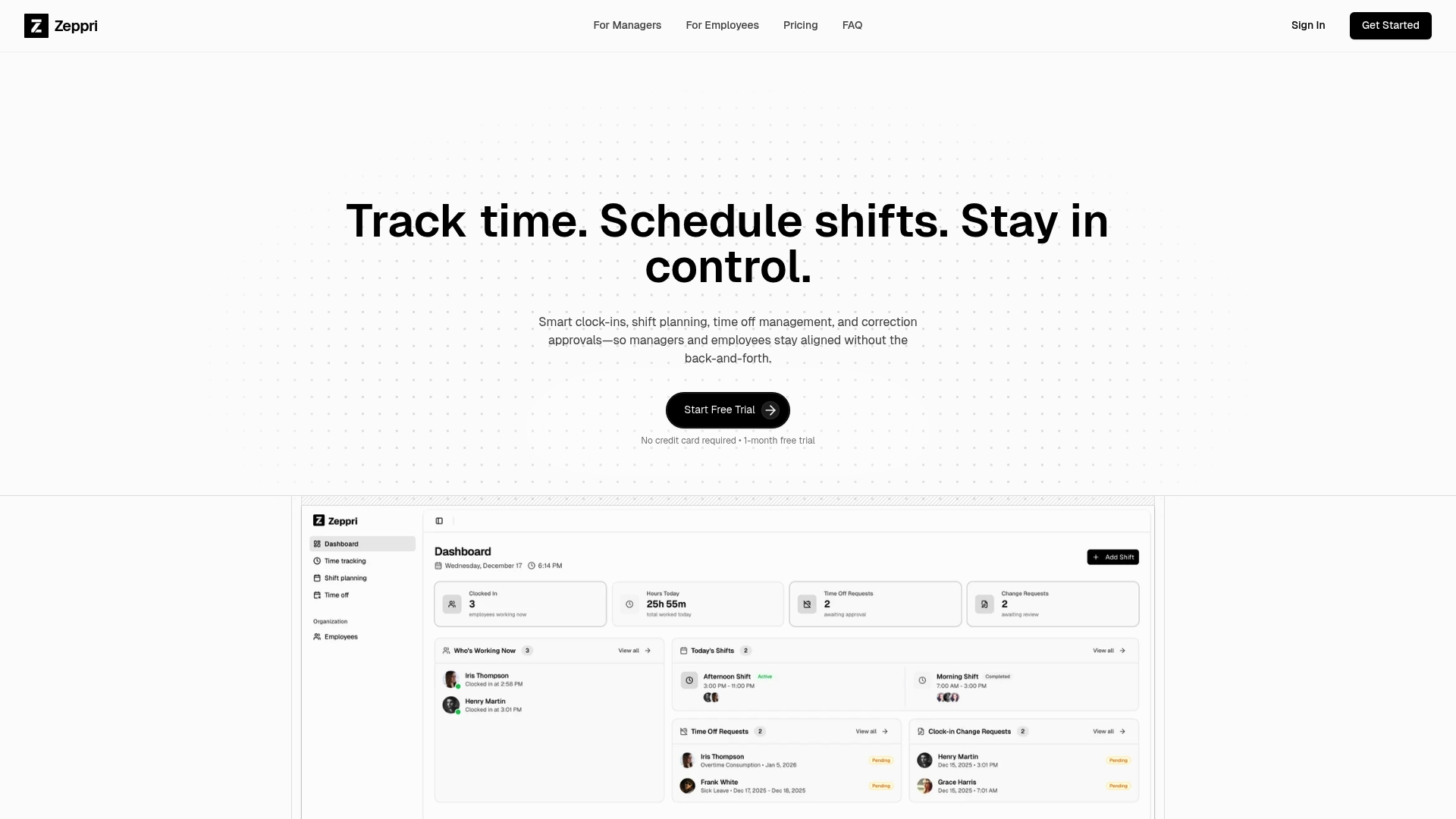
Zeppri's workforce management solutions are built specifically to help HR managers and compliance officers move from reactive to proactive. With real-time time tracking, geofencing for location-verified clock-ins, automated scheduling compliance checks, and on-demand reporting, Zeppri gives you the visibility and control your compliance program needs. Whether you are managing a single location or a distributed workforce across multiple sites, Zeppri scales with your organization and keeps compliance built into every workflow from day one.
Frequently asked questions
What are common workforce compliance challenges for HR managers?
Regulatory demands and manual processes create the biggest challenges, including keeping up with changing labor laws, ensuring accurate time tracking, and maintaining organized documentation that holds up during audits.
How does technology improve compliance management?
Automated systems streamline compliance by reducing human error, centralizing recordkeeping, and giving managers real-time visibility into scheduling, hours, and leave data without manual intervention.
Why is collaborative compliance management becoming more popular?
Distributed models fit modern workforce needs more effectively because shared responsibility creates broader accountability, keeps employees engaged in the process, and allows organizations to adapt faster when regulations change.
How can compliance drive business value?
Compliance can enhance growth, reputation, and trust by reducing legal exposure, improving employee satisfaction, and positioning your organization as a reliable, well-managed employer in your industry.