

TL;DR:
- Real-time analytics provides immediate workforce insights, enabling proactive decision-making.
- Implementing real-time analytics can yield up to 172% ROI and 18% productivity gains.
- Success depends on clear priorities, data quality, cultural acceptance, and focused use cases.
Most organizations are still making scheduling and staffing decisions based on yesterday's data. That gap between what happened and what's happening right now costs more than most leaders realize. Empirical benchmarks show a 172% three-year ROI and up to $6.82 million in measurable benefits from real-time analytics solutions applied to workforce management. This article breaks down what real-time analytics actually means for HR and operations teams, where it delivers the biggest returns, what makes adoption hard, and how your organization can put it to work in a practical, sustainable way.
Table of Contents
- What is real-time analytics and why it matters
- Measurable impacts: ROI, productivity, and retention
- Common challenges and how to overcome them
- Applying real-time analytics: Practical steps for HR leaders
- Our take: Why real-time analytics is a game changer, if used wisely
- Take the next step: Real-time analytics with Zeppri
- Frequently asked questions
Key Takeaways
| Point | Details |
|---|---|
| Real-time drives ROI | Organizations using real-time analytics achieve high returns and boost productivity. |
| Address adoption barriers | Successful implementation requires navigating technical and cultural challenges. |
| Not one-size-fits-all | Evaluate whether real-time or batch analytics best fits your workforce scenario. |
| Actionable strategies | HR leaders can use step-by-step approaches to deploy analytics for measurable gains. |
What is real-time analytics and why it matters
Real-time analytics in workforce management means getting actionable insights from your employee data as it is generated, not hours or days after the fact. Traditional workforce reporting runs on batch cycles: data is collected, processed overnight or weekly, and delivered to managers as a historical snapshot. By the time a supervisor sees that overtime is spiking or that a department is understaffed, the moment to act has already passed.
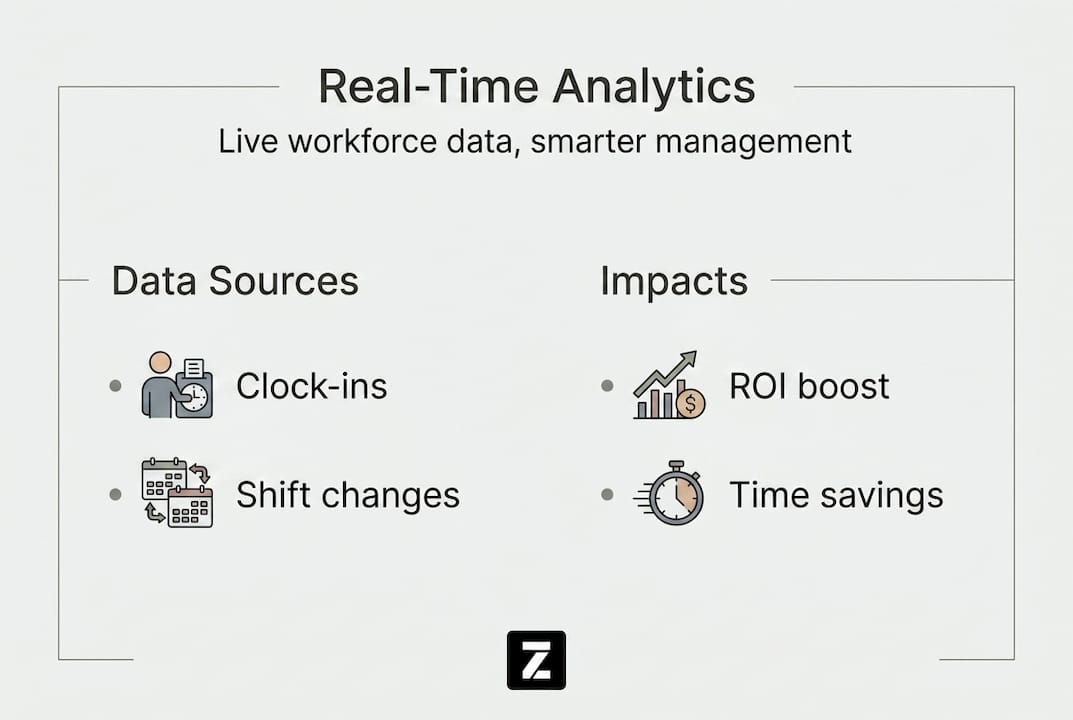
Real-time analytics flips that model. Clock-in events, shift changes, absence patterns, and labor cost signals feed directly into a live dashboard. Managers see what is happening across locations, shifts, and teams at the exact moment decisions need to be made. This is not just a technology upgrade. It represents a fundamentally different management posture, moving from reactive to proactive.
A useful way to think about it: batch reporting is like reading this morning's newspaper to decide what to wear today. Real-time analytics is like checking the radar app five minutes before leaving the house.
Core benefits of real-time workforce analytics include:
- Faster scheduling corrections when absences or no-shows occur
- Reduced labor cost overruns by catching overtime before it compounds
- Improved employee experience through faster response to leave requests and shift swaps
- Greater payroll accuracy because clock-in data feeds reporting without manual data entry
- Stronger compliance tracking, particularly for organizations with strict labor regulations
The productivity case is strong. Azure and Power BI workforce implementations have demonstrated 80% faster insights compared to traditional reporting pipelines. That speed difference is what separates an organization that adjusts staffing mid-shift from one that discovers the problem in next week's payroll run.
"The difference between real-time and batch reporting isn't just speed. It's the difference between having a conversation and reading meeting notes."
For HR managers who want to understand how time tracking fits into this picture, the manager's guide to time tracking covers the foundational mechanics well. And while the benefits are real, addressing real-time analytics challenges honestly is just as important as celebrating the upside.
Legacy workforce systems were not designed for this level of data velocity. They rely on periodic exports, manual reconciliation, and static dashboards that often require an IT request just to update a report filter. For organizations scaling past 50 employees, that friction adds up fast.
Measurable impacts: ROI, productivity, and retention
The business case for real-time analytics goes well beyond convenience. The numbers from real-world implementations are striking, and they hold up across industries from retail to healthcare to manufacturing.
Workforce analytics research documents a 172% three-year ROI as a benchmark, with some implementations reaching 122X returns on initial investment. These figures reflect savings from reduced overtime, lower absenteeism, faster onboarding cycles, and measurable productivity gains. The same research identifies an 18% average increase in workforce productivity and overtime reductions ranging from 27% to 38%, depending on industry and implementation quality.
| Metric | Benchmark result |
|---|---|
| 3-year ROI | 172% |
| Maximum ROI observed | 122X |
| Productivity increase | 18% |
| Overtime reduction | 27% to 38% |
| Customer retention improvement | 12% |
| Insight delivery speed | 80% faster |
The customer retention figure deserves special attention. A 12% improvement in customer retention tied to workforce analytics might seem indirect at first. The mechanism is straightforward though: when managers have real-time visibility into staffing levels, service quality stays consistent. Understaffed shifts lead to longer wait times, lower service scores, and ultimately, customer churn. Real-time analytics closes that loop.
Where the gains show up most clearly:
- Overtime management: When managers can see hours accumulating live, they can redistribute shifts before overtime thresholds trigger. Organizations with 500+ employees report saving hundreds of thousands annually from this alone.
- Absence pattern detection: Real-time data reveals chronic absence patterns that would take weeks to surface in batch reports, enabling earlier HR intervention.
- Payroll accuracy: Automated time data reduces manual correction cycles, which are both expensive and demoralizing for payroll teams.
- Compliance risk reduction: Labor law violations often result from gaps in oversight. Real-time tracking closes those gaps before violations occur rather than after.
The automated time tracking benefits for modern teams are well-documented, and they compound when layered with live analytics. Mobile-first workforce tools also play a direct role here. Organizations that use mobile apps for workforce engagement report faster data capture and significantly fewer manual errors, both of which feed better analytics.
One of the less-discussed ROI drivers is manager time savings. When supervisors spend less time chasing down attendance data, reconciling spreadsheets, and manually building reports, they spend more time actually managing their teams. That shift has a compounding effect on team performance that rarely appears in formal analytics studies but is consistently reported by operations leaders who make the switch.

Common challenges and how to overcome them
Real-time analytics is not a plug-and-play upgrade. Organizations that treat it as a simple software switch tend to run into problems that could have been anticipated and avoided. Understanding the real obstacles upfront is what separates successful implementations from expensive ones.
Technical and organizational complexity is significant. Real-time data pipelines require stateful processing, meaning the system must continuously track ongoing events rather than processing completed batches. This demands 24/7 site reliability engineering support, more sophisticated debugging tools, and rigorous data quality monitoring. For smaller IT teams, that overhead can be a genuine constraint.
The most common implementation challenges include:
- Data latency issues: Even "real-time" systems have lag. Understanding acceptable thresholds (seconds vs. minutes) matters for your specific use case.
- Integration complexity: Workforce management platforms must connect cleanly with payroll, HRIS, and scheduling systems. Poor integration creates data gaps that undermine the entire analytics layer.
- Security and privacy concerns: Employee location data, clock-in records, and behavioral patterns are sensitive. GDPR, CCPA, and sector-specific regulations create compliance obligations that must be addressed at the architecture level, not added as an afterthought.
- Data quality problems: Real-time analytics amplifies both good and bad data. If clock-in processes are inconsistent, the analytics will reflect that inconsistency instantly.
- Cultural resistance: Perhaps the most underestimated challenge. Managers accustomed to weekly reports often resist daily or live dashboards, fearing increased scrutiny. Frontline employees may distrust location-based tracking without clear communication about its purpose.
"Real-time analytics imposes a complexity tax. The question isn't whether it's worth it, it's whether your organization is ready to pay it and has a real need that justifies the cost."
For overcoming real-time analytics barriers, experts consistently recommend starting with a focused use case rather than a full platform rollout. Prove value in one area, build confidence, then expand. This reduces technical risk and creates internal champions who can help navigate the cultural side.
Pro Tip: Before committing to real-time analytics infrastructure, audit your current data quality. If your clock-in records have more than 5% error rates from manual corrections or missed punches, fix that first. Analytics built on bad data deliver bad insights, faster.
Sound workforce compliance strategies are especially important during implementation. Privacy policies, employee communication plans, and data governance frameworks need to be in place before the first live dashboard goes live. Treating compliance as a prerequisite rather than an afterthought protects both employees and the organization.
Applying real-time analytics: Practical steps for HR leaders
Moving from concept to implementation requires a structured approach. Here is a step-by-step framework that HR managers and operations leaders can adapt to their organization's scale and maturity.
Step 1: Define your highest-priority use case. Don't try to solve everything at once. Identify the single workforce problem that costs the most, whether that's overtime overruns, attendance gaps, or payroll errors, and focus your first analytics deployment there. Concrete targets lead to measurable wins.
Step 2: Audit your existing data infrastructure. Map where employee data currently lives, how it flows between systems, and where manual steps introduce errors or delays. This audit reveals integration requirements before you commit to a platform.
Step 3: Select tools with appropriate architecture. Stream processing, APIs, and encryption are the technical foundation for secure, reliable real-time analytics. Platforms that offer native integrations and pre-built workforce connectors significantly reduce implementation time and risk.
Step 4: Pilot with a single team or location. Run a four to six week pilot with a defined group. Measure the specific metrics you targeted in step one. Document what works and what creates friction. Use that evidence to refine the rollout plan for the broader organization.
Step 5: Train managers on interpretation, not just operation. A dashboard is only useful if the person looking at it knows what to do with the information. Invest in training that focuses on decision-making from live data, not just how to log in to the platform.
Step 6: Establish a continuous improvement cadence. Real-time analytics is not a one-time setup. Schedule quarterly reviews to assess whether your dashboards still reflect your organization's priorities, add new data sources as needs evolve, and retire metrics that no longer drive decisions.
| Scenario | Batch analytics outcome | Real-time analytics outcome |
|---|---|---|
| Unexpected absence, mid-shift | Manager learns next day | Alert triggers immediate coverage options |
| Overtime threshold approaching | Discovered in weekly payroll run | Manager redirects hours before threshold |
| Compliance audit preparation | Manual data pull over days | Instant report export with full audit trail |
| New hire onboarding tracking | Weekly status reports | Live progress visible from day one |
Efficient shift scheduling becomes dramatically more effective when backed by live data. Likewise, mobile clock-in for accuracy ensures that the data feeding your analytics is captured precisely at the point of work, not reconstructed from memory at day's end. For multi-location organizations, the ability to centralize schedule management means analytics can surface patterns across sites that would otherwise stay invisible.
Pro Tip: Set up automated alerts for the three or four metrics that most directly affect your labor costs. Proactive notifications mean you don't need to watch dashboards constantly. The system flags exceptions and you respond. This keeps analytics practical without overwhelming your management team.
Our take: Why real-time analytics is a game changer, if used wisely
Here is something most articles on this topic won't tell you: the organizations that struggle most with real-time analytics are not the ones with bad technology. They are the ones with unclear priorities.
We have seen teams invest in sophisticated streaming infrastructure and then use it to reproduce the same weekly summary report they had before, just slightly faster. That is not transformation. That is expensive mimicry.
The genuine game-changing value of real-time analytics comes from matching the capability to an actual decision that needs to happen faster. Overcrowded floors need staffing adjustments in minutes, not hours. Compliance windows in healthcare close fast. Retail peaks are predictable but demand rapid response. In those contexts, live data directly enables better outcomes. In others, cultural resistance and complex technical requirements may make real-time analytics more disruptive than helpful.
The organizations that win with real-time analytics are the ones that treat it as a change management initiative first and a technology project second. They communicate with employees about what data is collected and why. They train managers to act on insights rather than just observe them. They start small, prove value, and build momentum.
For industries like hospitality, where shift patterns are volatile and staff wellbeing is directly tied to scheduling quality, workforce management for hospitality shows how analytics-driven scheduling reduces both burnout and operational gaps. The same principles apply across sectors.
Real-time analytics is not a magic fix. It is a lever. The outcome depends entirely on how well your organization is positioned to pull it.
Take the next step: Real-time analytics with Zeppri
If this article has made one thing clear, it is that real-time analytics in workforce management is only as powerful as the platform delivering it and the team using it.
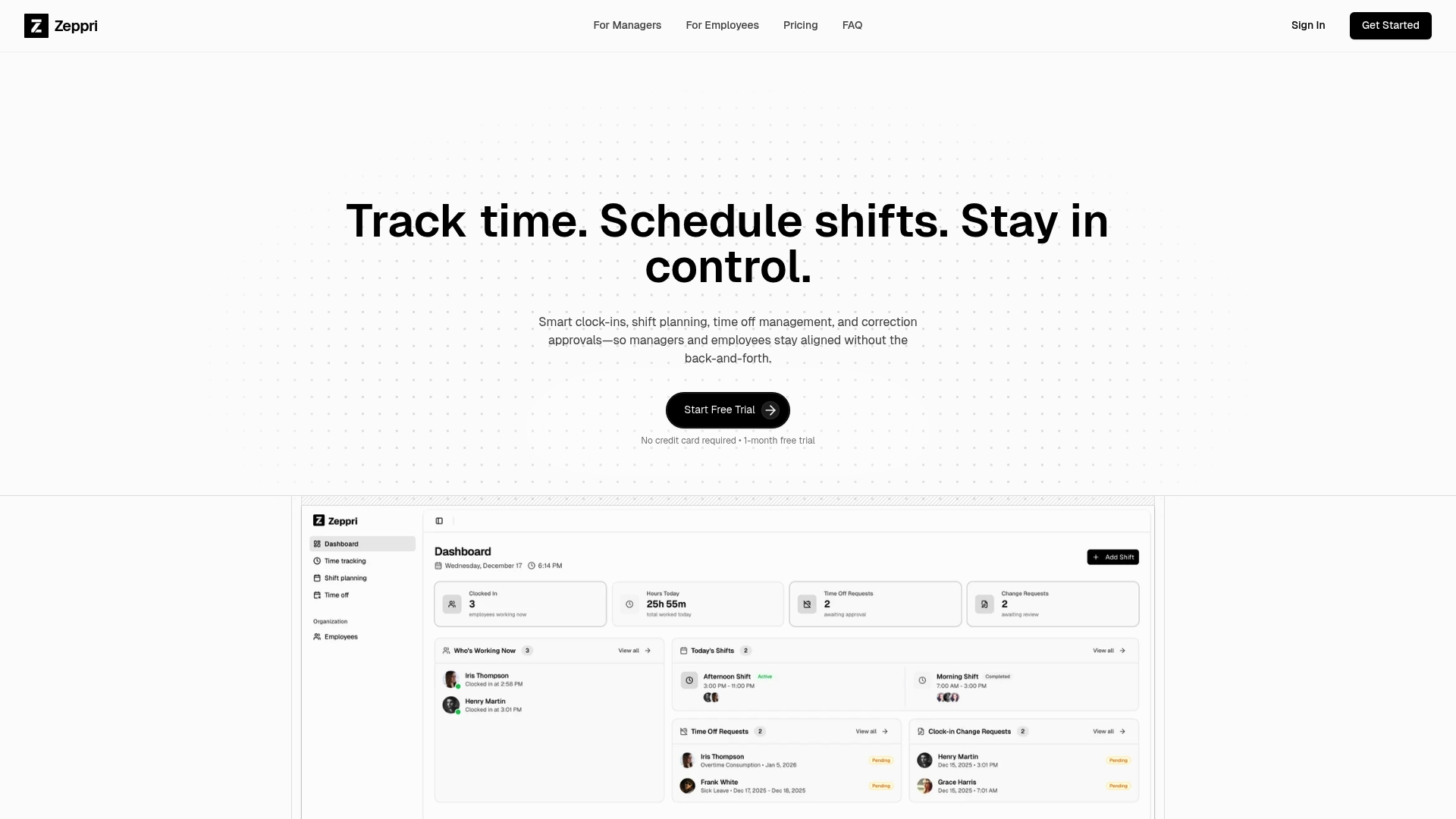
Zeppri is built specifically for organizations that need more than a scheduling tool. The Zeppri workforce management platform brings together real-time clock-ins, geofenced location tracking, automated time-off requests, live manager dashboards, and robust reporting in a single system designed for quick onboarding and everyday use. Whether you are managing 20 employees or 2,000, Zeppri gives HR leaders and operations managers the live visibility they need to act faster, stay compliant, and run leaner. Explore the platform and see how real-time analytics can work for your team starting today.
Frequently asked questions
What is the ROI of real-time analytics in workforce management?
Empirical case studies report 172% ROI over three years, up to 122X returns on investment, and 18% productivity increases, with overtime reductions averaging 27% to 38% across industries.
How can HR managers overcome resistance to real-time analytics?
Leaders should build buy-in incrementally by highlighting early wins from pilot programs and making data access feel empowering rather than surveillant. Cultural resistance is one of the most common blockers, and targeted change management almost always matters more than the technology itself.
Are real-time analytics always necessary for workforce management?
Not always. Batch analytics may be sufficient for use cases where decisions are made daily or weekly rather than in the moment, and choosing the simpler option can save significant technical overhead.
What tools support real-time analytics implementation?
Platforms using stream processing and API-based integrations like Azure and Power BI deliver 80% faster insight generation. Workforce management platforms with native real-time reporting built in reduce implementation complexity significantly.