

TL;DR:
- Workforce management in hospitality optimizes staffing to control costs and improve service quality.
- Effective WFM reduces turnover, burnout, and ensures compliance with labor laws.
- Modern systems can deliver up to 15% labor savings and significantly faster scheduling.
Labor costs in hospitality run 25-35% of revenue and annual turnover sits at a staggering 73.8%, making it one of the most operationally demanding industries on the planet. If you manage a hotel, restaurant, or resort, those numbers hit close to home. Workforce management (WFM) is the system that sits between you and those costs, giving you real control over scheduling, compliance, and the daily experience your staff actually have. This article breaks down what WFM really means in a hospitality context, why it matters more than most managers realize, and what practical steps you can take to move from reactive firefighting to confident, proactive operations.
Table of Contents
- Understanding workforce management in hospitality
- The four pillars: How workforce management transforms hospitality operations
- Quantified impact: The business case for better workforce management
- Beyond savings: Overlooked risks and success factors in workforce management
- What most hospitality guides miss: Real-world balancing acts
- Ready to master workforce management in your hospitality business?
- Frequently asked questions
Key Takeaways
| Point | Details |
|---|---|
| Labor costs dominate | Managing your hospitality workforce properly directly controls your largest operational expense. |
| Four pillars of success | Effective workforce management optimizes cost, service, compliance, and employee engagement. |
| Real ROI outcomes | Hotels using smart WFM have cut labor costs by up to 15% and reduce scheduling time significantly. |
| Sustainability over shortcuts | Long-term wins require balancing efficiency with staff well-being and realistic scheduling. |
Understanding workforce management in hospitality
Workforce management is a term that gets thrown around a lot, but in hospitality it means something very specific. It covers everything from forecasting how many staff you need on a Friday night to tracking who clocked in late, managing time-off requests, and staying compliant with labor laws. It is not just scheduling software. It is a connected system that links your business demand to your people strategy.
"Workforce management means placing the right staff in the right place at the right time to serve customers, optimizing labor across fluctuating demand."
What makes hospitality uniquely challenging is the sheer unpredictability of demand. A conference booking, a local festival, or a sudden snowstorm can flip your staffing needs overnight. Unlike a factory with steady production cycles, hotels and restaurants operate in a constant state of flux. That means your WFM system needs to be flexible, fast, and accurate.
Here is what a solid WFM approach covers in hospitality:
- Demand forecasting: Using historical data and booking trends to predict staffing needs
- Shift scheduling: Building rosters that match demand without overstaffing or burning people out
- Time and attendance tracking: Recording actual hours worked, breaks, and overtime
- Compliance management: Ensuring schedules meet labor law requirements, including rest periods and maximum hours
- Leave and absence management: Handling requests fairly and keeping coverage intact
Because labor costs represent 25-35% of revenue in most hospitality operations, getting WFM right is the single highest-leverage action a manager can take. Shaving even a few percentage points off your labor spend while keeping service quality high is the difference between a profitable quarter and a painful one. Learning efficient staff scheduling is where most managers find the fastest wins.
The four pillars: How workforce management transforms hospitality operations
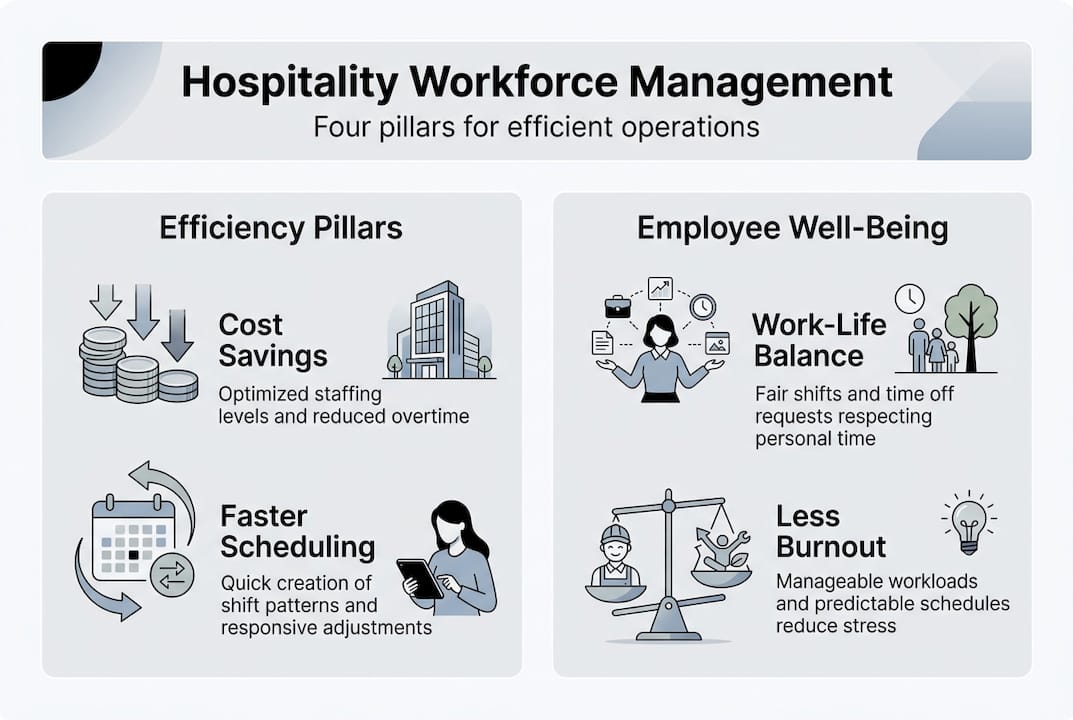
Effective WFM does not just save money. It drives four core outcomes that shape everything from your bottom line to your team culture. These four pillars, cost savings, customer service, regulatory compliance, and employee engagement, work together as a system. Neglect one and the others start to crack.
Cost savings and labor optimization mean you stop paying for hours you do not need and stop scrambling to fill gaps that cost you in overtime or agency fees. Customer service improves when the right people are on the floor at the right time, not when you are two staff members short during a dinner rush. Regulatory compliance protects you from fines and legal exposure by ensuring your schedules respect labor law requirements. Employee engagement grows when staff feel their time is respected, their requests are handled fairly, and their schedules are predictable.
| Pillar | Daily impact | What success looks like |
|---|---|---|
| Cost savings | Fewer overtime hours, tighter labor spend | Labor costs stay within budget each week |
| Customer service | Adequate coverage during peak periods | Guest satisfaction scores improve |
| Compliance | Schedules meet legal rest and hour requirements | Zero labor law violations |
| Employee engagement | Fair, predictable rosters and easy leave requests | Lower absenteeism and turnover |
Modern WFM systems have shown they can deliver up to 15% labor savings and 50% faster scheduling compared to manual methods. That is not a marginal improvement. That is a structural shift in how efficiently your operation runs.

Pro Tip: Do not optimize for just one pillar. Managers who obsess over cost savings while ignoring engagement often find their turnover spikes, which wipes out every dollar saved. Follow the scheduling step-by-step approach to keep all four pillars in balance.
Quantified impact: The business case for better workforce management
Numbers tell the story better than any argument. In 2026, US hotels have continued to improve labor efficiency, with hours per occupied room (HPOR) dropping 7-15% across departments, even as wages rose between 3.7% and 5.9%. That means operators found ways to do more with less, protecting margins in a high-cost environment.
HPOR is a key efficiency metric in hotels. It measures how many labor hours are used per room occupied. A lower HPOR means your team is working smarter, not just harder. When you combine demand-driven scheduling with real-time tracking, you get the data to make those improvements consistently.
The financial case gets even stronger when you look at case studies. Integrated resorts using demand-driven staffing have reported 15% annualized labor savings, while hotel groups using modern scheduling tools cut their scheduling time in half. Those are real hours returned to managers who can then focus on service, training, and strategy.
Turnover is where the hidden costs pile up fast. Hospitality turnover at 73.8% annually costs roughly $5,864 per employee lost. Poor scheduling is a direct contributor because it creates work-life imbalance, which pushes good people out the door.
Here is how WFM investment generates ROI in a clear sequence:
- Accurate demand forecasting reduces overstaffing and unnecessary overtime
- Optimized schedules improve service quality and guest satisfaction
- Consistent, fair scheduling reduces burnout and voluntary turnover
- Lower turnover cuts recruitment and training costs significantly
- Compliance tracking eliminates fines and legal exposure
- Real-time data enables faster, smarter management decisions
Using mobile clock-in benefits to capture accurate attendance data feeds directly into this cycle, giving you the clean numbers you need to keep improving.
Beyond savings: Overlooked risks and success factors in workforce management
Here is where most WFM conversations stop short. Everyone talks about saving money and speeding up scheduling, but fewer people talk about the risks hiding inside an aggressive efficiency push.
Chronic overtime is one of the clearest warning signs. When your team regularly works beyond their scheduled hours, it is rarely a scheduling mistake. Chronic overtime signals structural issues like chronic understaffing or demand variability that your current model cannot absorb. Fixing it requires looking at your staffing model, not just your schedule.
The cost of going too lean is real. Extreme efficiency drives burnout in 65% of staff, and burnout feeds the exact turnover cycle you are trying to break. Sustainable scheduling builds in buffers, cross-trains staff across roles, and treats predictability as a feature, not a luxury.
Common pitfalls that cost hospitality operations more than they save:
- Understaffing peak periods to hit a labor percentage target, then losing guests to poor service
- Ignoring cross-training so that one absence creates a cascade of coverage problems
- Over-relying on AI forecasting tools before your underlying data and processes are clean
- Cutting hours reactively without understanding the demand patterns driving the need
- Neglecting staff input on scheduling preferences, which accelerates disengagement
AI enhances forecasting but it requires solid foundational data and clear processes before it adds real value. A sophisticated tool on top of messy data just gives you bad answers faster.
Pro Tip: Prioritize sustainability over short-term savings. A schedule that saves 5% on labor this week but burns out your best front-desk staff costs you far more over the next quarter. Use staff accountability tips to build a culture of reliability without pressure.
What most hospitality guides miss: Real-world balancing acts
Most WFM guides frame the challenge as a math problem. Get the ratios right, deploy the right software, and watch the savings roll in. That framing misses something essential about how hospitality actually works.
Your staff are not inputs in a labor equation. They are the reason guests come back. The best workforce management approaches we have seen work long-term are the ones that treat technology as an enabler of good leadership, not a replacement for it. A scheduling platform can surface patterns you would never catch manually. But it cannot replace the manager who notices a team member is struggling and adjusts their load before it becomes a resignation.
Real-world WFM success looks like a living system. You set up your tools, you run your forecasts, and then you stay curious. You ask your team what is working. You watch your HPOR numbers and your turnover data side by side. You experiment with shift structures and measure the results. The managers who win long-term are not the ones with the most advanced software. They are the ones who combine smart tools with genuine attention to their people.
Ready to master workforce management in your hospitality business?
If this article gave you a clearer picture of what workforce management can do for your operation, the next step is finding tools that actually deliver on that promise without adding complexity to your day.
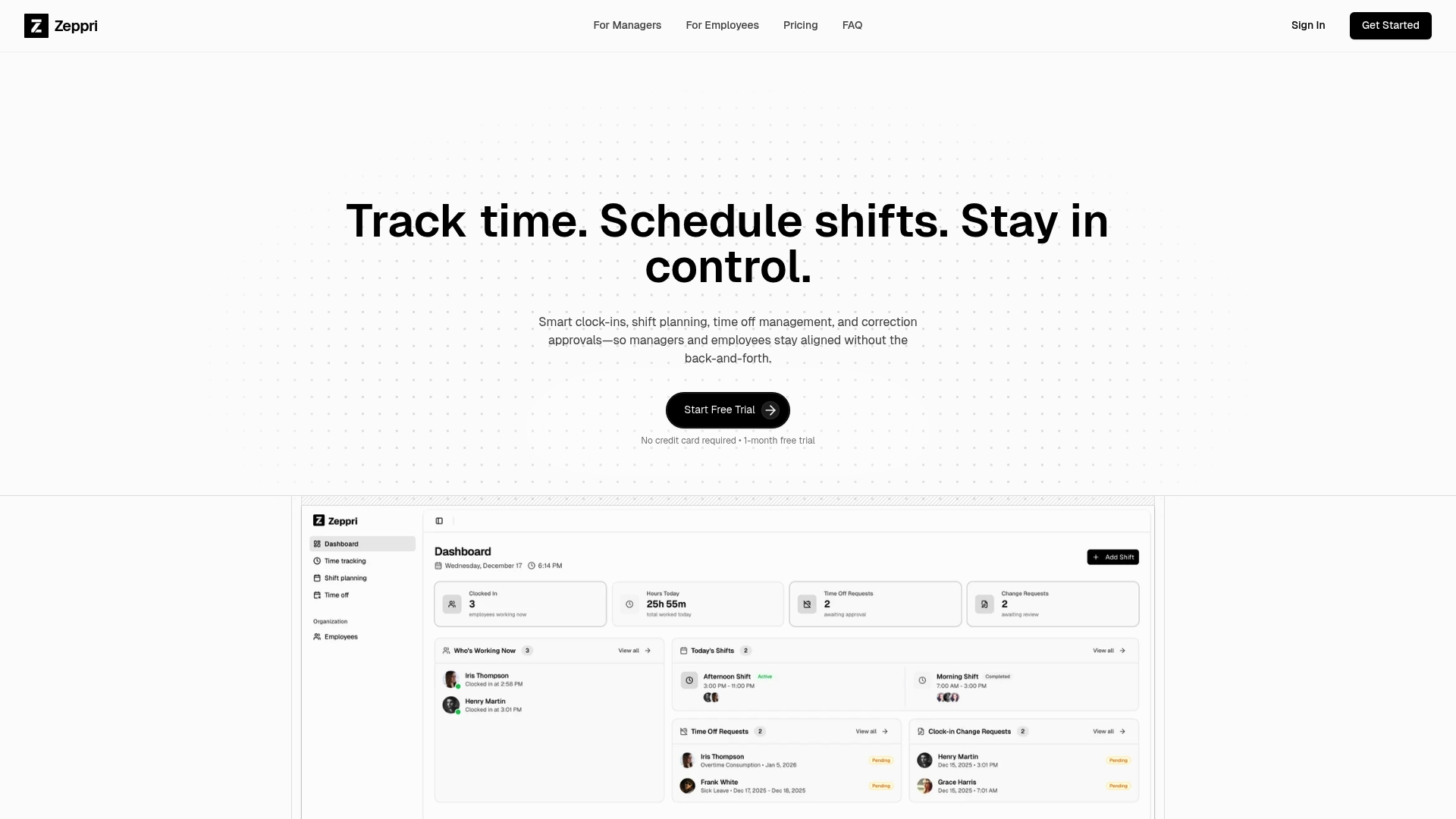
Zeppri is built for exactly this. Whether you manage a boutique hotel, a multi-location restaurant group, or a large resort, Zeppri's modern workforce management platform brings scheduling, time tracking, compliance, and attendance into one intuitive system. Real-time mobile clock-ins, geofencing, automated leave requests, and detailed reporting give you the visibility and control you need to run a leaner, fairer, more responsive operation. Visit Zeppri to explore how the platform can support your team and your bottom line.
Frequently asked questions
What is workforce management in hospitality?
Workforce management is the process of strategically scheduling, monitoring, and supporting staff so hotels or restaurants have the right people in the right roles at the right time to serve guests and maximize efficiency.
How does workforce management impact labor costs?
Effective workforce management helps control labor costs, which often represent 25-35% of revenue in hospitality operations, by optimizing how and when staff are scheduled to match actual demand.
Can workforce management help reduce employee turnover?
Yes, improving workforce management lowers turnover by preventing burnout, creating better work-life balance, and increasing engagement, especially given that hospitality turnover hits 73.8% annually.
How do hotels benefit from modern workforce management systems?
Hotels see faster scheduling, labor savings, improved compliance, and better guest experiences, with case studies showing 15% annualized labor savings and 50% faster scheduling in hotel groups using modern WFM tools.