

TL;DR:
- Poorly managed time off requests pose compliance risks, scheduling gaps, and administrative costs.
- Automation, clear policies, and proactive communication are essential for efficient leave management.
- Trust and culture significantly impact employee PTO utilization, beyond just systems and tools.
Poorly managed time off requests don't just frustrate employees. They create real compliance risk, scheduling gaps, and administrative chaos that costs your organization time and money. 55% of employees leave PTO unused, averaging 9.5 days per year, which signals something is broken in how leave is communicated and tracked. Meanwhile, HR teams and managers are stuck manually chasing approvals, interpreting overlapping leave laws, and hoping nothing slips through the cracks. This guide walks you through a practical, step-by-step process for managing time off requests efficiently, including legal compliance checks, automation tools, and communication strategies that actually hold up.
Table of Contents
- Assess requirements and prepare your time off process
- Implement tools and technology for automation
- Establish clear policies and communication protocols
- Monitor, verify, and optimize your time off management
- Why most time off requests fail—what actually works for managers
- Next steps: Streamline your time off management
- Frequently asked questions
Key Takeaways
| Point | Details |
|---|---|
| Preparation is crucial | Understand your organization's leave policies and legal obligations before setting up your time off process. |
| Leverage automation tools | Use specialized software for tracking, approvals, and integration with payroll to save time and prevent errors. |
| Communication prevents delays | Clear workflows and proactive notice ensure both compliance and employee satisfaction. |
| Regular audits boost morale | Monitor and encourage PTO usage to improve workforce well-being and avoid costly oversight. |
Assess requirements and prepare your time off process
Before you build or revamp your time off system, you need a clear picture of what types of leave your organization actually offers. Most companies deal with several distinct categories: paid time off (PTO), sick leave, federal holidays, bereavement, jury duty, and protected leaves like the Family and Medical Leave Act (FMLA). Each comes with its own rules, eligibility criteria, and documentation needs.
Here's a quick breakdown of the most common leave types and what to document for each:
| Leave type | Legal basis | Key documentation needed |
|---|---|---|
| PTO / vacation | Company policy | Accrual schedule, carryover rules |
| Sick leave | State/local laws vary | Usage limits, certification requirements |
| FMLA | Federal law | Eligibility check, medical certification |
| Holiday | Company policy | Published holiday calendar |
| Bereavement | Company policy | Relationship verification |
Solid workforce compliance strategies start here, with accurate policy documentation before the first request ever comes in.
The average US employee receives 10-11 vacation days plus 7-8 sick days annually, yet many organizations have policies that don't clearly communicate how those days accrue, when they expire, or how requests should be submitted. That gap creates confusion on both sides.
For complex cases like FMLA, the stakes are even higher. You must verify eligibility within 5 days of a leave request, confirming 12 months of service and at least 1,250 hours worked. Intermittent FMLA, where an employee takes leave in separate blocks due to a chronic condition, is especially easy to mismanage without a clear intake process.
Here's what your preparation phase should cover:
- Map every leave type your organization offers, including any state-specific paid family and medical leave (PFML) programs
- Document eligibility rules for each leave type in plain language that employees can actually understand
- Identify who approves what, particularly for complex cases that require HR versus manager sign-off
- Create a request intake form that captures all the information you need upfront, reducing back-and-forth
- Establish a record-keeping standard that satisfies both federal and state audit requirements
Pro Tip: Run a quick audit of last year's leave requests. Look for patterns in denials, disputes, or incomplete submissions. These patterns usually point directly to where your process needs the most work.
Implement tools and technology for automation
Once you know your requirements, manual spreadsheets simply can't keep up. Automation isn't a luxury for larger organizations. It's a practical necessity for any team managing more than a handful of employees.
The automated time tracking benefits go well beyond saving time on paperwork. Automation reduces human error in accrual calculations, eliminates approval bottlenecks, and gives employees real-time visibility into their available balances. That transparency alone significantly reduces the volume of HR inquiries.

Here's how common time off management tools compare:
| Tool | Best for | Key strengths | Limitations | |---|---|---| | BambooHR | Small to mid-size teams | Easy UI, integrated HR modules | Limited payroll in some plans | | Rippling | Fast-growing companies | Deep payroll integration, automation | Higher cost at scale | | Spreadsheets | Micro businesses | Free, flexible | Error-prone, not scalable | | Zeppri | All organization sizes | Scheduling, time tracking, leave in one | Newer platform |
Modern PTO management software handles accruals automatically, routes approvals to the right manager, syncs with shared calendars, and generates compliance reports on demand. For HR teams juggling dozens of leave requests monthly, that kind of automation is the difference between staying compliant and missing a deadline.
When evaluating tools, look for these capabilities:
- Automatic accrual calculations that update in real time as hours are worked
- Manager dashboards that show pending requests, team coverage, and leave balances at a glance
- Employee self-service portals so staff can submit, track, and modify requests without emailing HR
- Payroll system integration to prevent discrepancies between leave records and pay stubs
- Audit trails that document every request, approval, and modification for compliance purposes
If you want a deeper look at how tracking tools support better decision-making, time tracking for managers covers the practical side of what data to collect and how to use it.
One thing worth emphasizing: the tool is only as good as your adoption rate. Roll out any new platform with a short training session and a simple reference guide. If employees don't trust or understand the system, they'll go around it, which recreates the manual mess you were trying to fix.
Establish clear policies and communication protocols
Automation handles the mechanics. But clear policies and consistent communication are what actually shape employee behavior and reduce friction before a request is even submitted.
Here's a step-by-step approach to building a communication-first leave process:
- Publish a written leave policy in your employee handbook that covers every leave type, submission deadlines, approval timelines, and what happens if a request is denied
- Set manager response deadlines, ideally within two to three business days for standard requests, so employees aren't left waiting without clarity
- Create a simple request workflow that tells employees exactly where to submit, what information to include, and who reviews it
- Provide regular policy reminders, especially at the start of each quarter or before high-demand periods like summer and year-end
- Train managers on leave law basics so they can spot situations that may trigger protected leave obligations before a formal request is filed
Proactive communication is especially critical for legally protected leave. As one employment law resource notes:
"Employers should proactively inform employees of their leave rights any time an employee mentions a health condition or family issue, even if they haven't formally requested leave."
That's not just good practice. It's a liability shield. Waiting for an employee to formally ask about FMLA before informing them of their rights is one of the most common and costly compliance mistakes HR teams make.
For additional guidance on building workflows that reduce scheduling conflicts when leave intersects with shift planning, efficient shift scheduling is a practical resource worth reviewing.
Pro Tip: Create a simple one-page leave request guide for employees that covers the five most common leave types, how to submit, and what to expect. Post it in your HR portal and share it during onboarding. It cuts down on questions and speeds up the process significantly.
You should also consider how leave policies connect to broader staff well-being strategies. Employees who feel supported in taking time off are measurably more engaged and less likely to burn out.
Monitor, verify, and optimize your time off management
Setting up a solid system is step one. Keeping it accurate and compliant over time is where most organizations fall short. Ongoing monitoring isn't optional. It's what separates organizations that manage leave well from those that get caught off-guard by audits or disputes.
Here's what a strong monitoring routine looks like:
- Quarterly leave audits: Review records for accuracy, missing documentation, and any patterns of excessive denials or unclaimed balances
- Compliance spot-checks: Confirm that FMLA designations are being made within required timeframes and that supporting documentation is on file
- Balance reporting: Flag employees who are approaching carryover limits so managers can proactively encourage time off before balances expire
- Year-end review: Reconcile all leave taken against payroll records to catch discrepancies before they become legal issues
- Manager feedback loops: Regularly ask managers if the current request workflow is working or creating bottlenecks
FMLA calculation is a specific area where errors are common. According to Department of Labor guidance, FMLA hours are calculated based on the employee's normal scheduled workweek, including mandatory overtime but excluding voluntary overtime. An employee who regularly works 42 hours per week, including two mandatory overtime hours, would have a 12-week FMLA leave equaling 504 hours, not 480.
That distinction matters during an audit. Getting it wrong creates liability even when your intentions are entirely correct.
On the PTO utilization side, the data is worth paying attention to. Unlimited PTO is offered by 4 to 28 percent of companies depending on industry, but employees at those organizations often take fewer days, around 10, than those with traditional accrual plans. The absence of a defined balance can actually reduce how much leave people take.
Centralizing how you manage and view schedules helps enormously here. Central schedule management gives HR and managers a single source of truth for who is out, when, and why, making it far easier to spot gaps before they affect operations.
Why most time off requests fail—what actually works for managers
Here's a truth most HR articles avoid: the systems and tools are rarely the actual problem. Most time off request failures come down to trust and clarity, two things no software can manufacture on its own.
We've seen organizations implement sophisticated PTO platforms only to find employees still email their managers directly, because they don't trust the system to work or fear their request will get lost. The platform is irrelevant if the culture around leave is unclear or quietly discouraging.
The unlimited PTO paradox is a perfect example. When there's no defined balance, employees often feel less entitled to take time, not more. Without a number to reference, they default to the unspoken norm, which is often taking less than they need.
What actually works is a combination of structured process, manager accountability, and genuine encouragement from leadership. Managers need to model taking time off themselves. HR needs to actively flag employees who haven't taken leave in months, not just track it. And mobile apps for workforce engagement can make the request process frictionless enough that employees actually use it.
The goal isn't compliance for its own sake. It's a workforce that feels trusted, rested, and ready to perform.
Next steps: Streamline your time off management
You've now got the full picture: assess your leave types, automate the mechanics, communicate clearly, and monitor consistently. The next step is putting it all into one place.
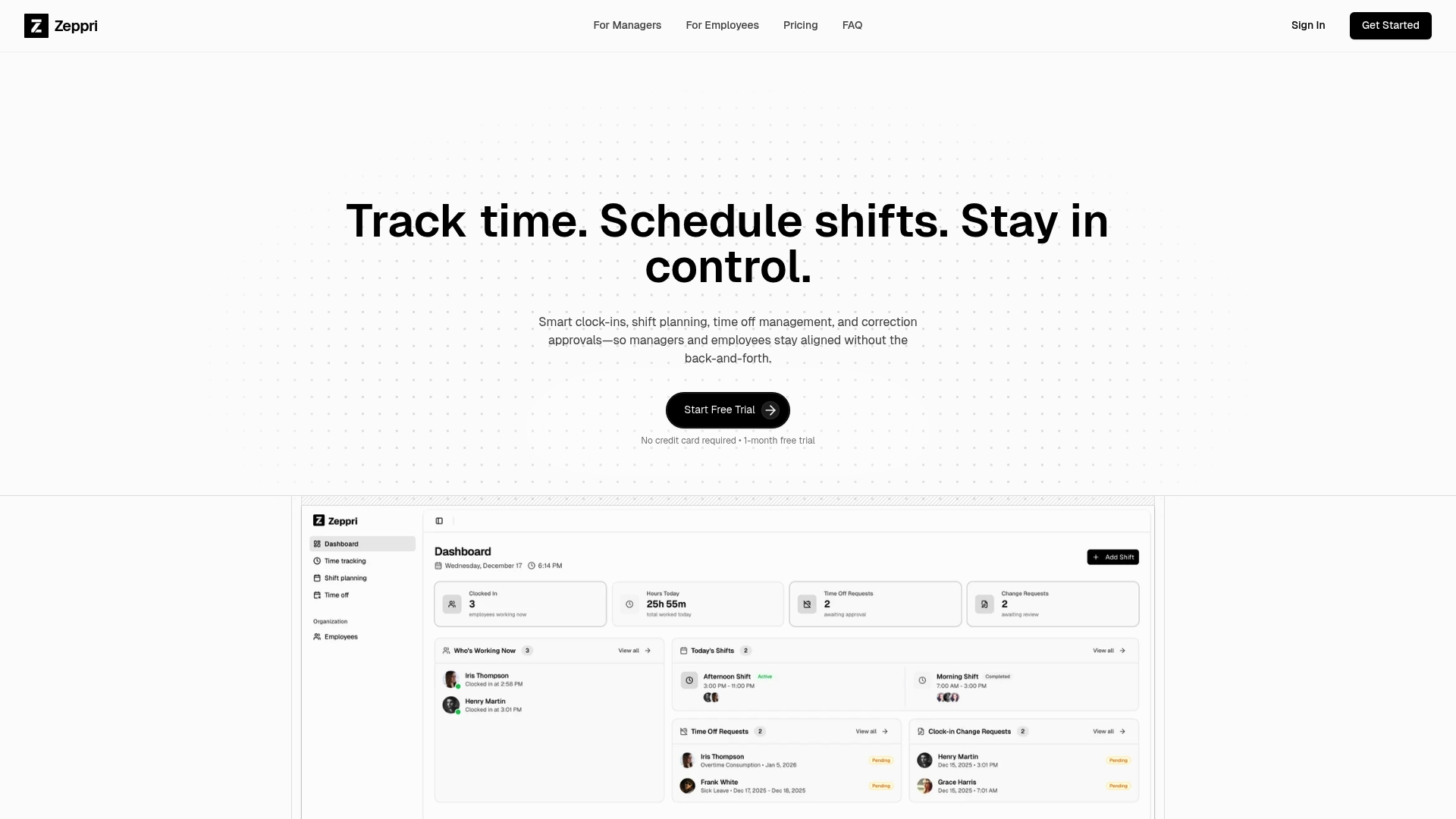
Zeppri's workforce management tools bring scheduling, time tracking, and leave management into a single platform built for the way modern teams actually work. Employees submit requests from their phones, managers approve with one tap, and HR gets real-time visibility into balances, coverage, and compliance. Whether you're managing a team of 20 or 2,000, Zeppri makes time off management something you spend less time on, so you can focus on the work that actually moves your organization forward. Explore what Zeppri can do for your team today.
Frequently asked questions
How can managers avoid legal issues with time off requests?
Managers should proactively inform employees of their leave rights the moment a health or family issue is mentioned, without waiting for a formal request. Timely designation of protected leave and accurate documentation are the two most important shields against liability.
What technology can help automate time off request management?
Specialized PTO management software like BambooHR and Rippling automates accruals, approval routing, calendar syncing, and reporting. Platforms that integrate directly with payroll eliminate the most common source of leave-related errors.
How do organizations calculate FMLA leave for non-traditional schedules?
FMLA hours are calculated using the employee's normal scheduled workweek, including mandatory overtime but not voluntary hours. An employee working 42 required hours per week is entitled to 504 hours of FMLA leave over 12 weeks.
Why do employees leave so much PTO unused?
Workplace culture plays a bigger role than most managers realize. 55% of employees leave PTO on the table, often because policies are unclear, the request process feels burdensome, or the unspoken norm discourages taking time away.